
You've seen the demos. The LinkedIn posts. The "AI is going to 10x your revenue" promises.
But here's what nobody tells you: Most AI implementations fail because companies chase shiny demos instead of solving actual business problems.
I've watched dozens of B2B SaaS companies ($1M-$25M ARR) burn time and budget on AI tools that look incredible in a sales pitch but fall apart when they hit real workflows, messy CRM data, and the complexity of your actual go-to-market motion.
The difference between AI hype and AI that actually moves the needle? Production-ready agents that connect to your existing systems, automate high-friction workflows, and create repeatable leverage, not just impressive screenshots.
Let's talk about how to actually deploy AI agents that run parts of your growth engine while your team focuses on what humans do best: building relationships, closing deals, and making strategic decisions.
Why Most AI "Solutions" Never Make It to Production
The problem isn't the technology. It's the approach.
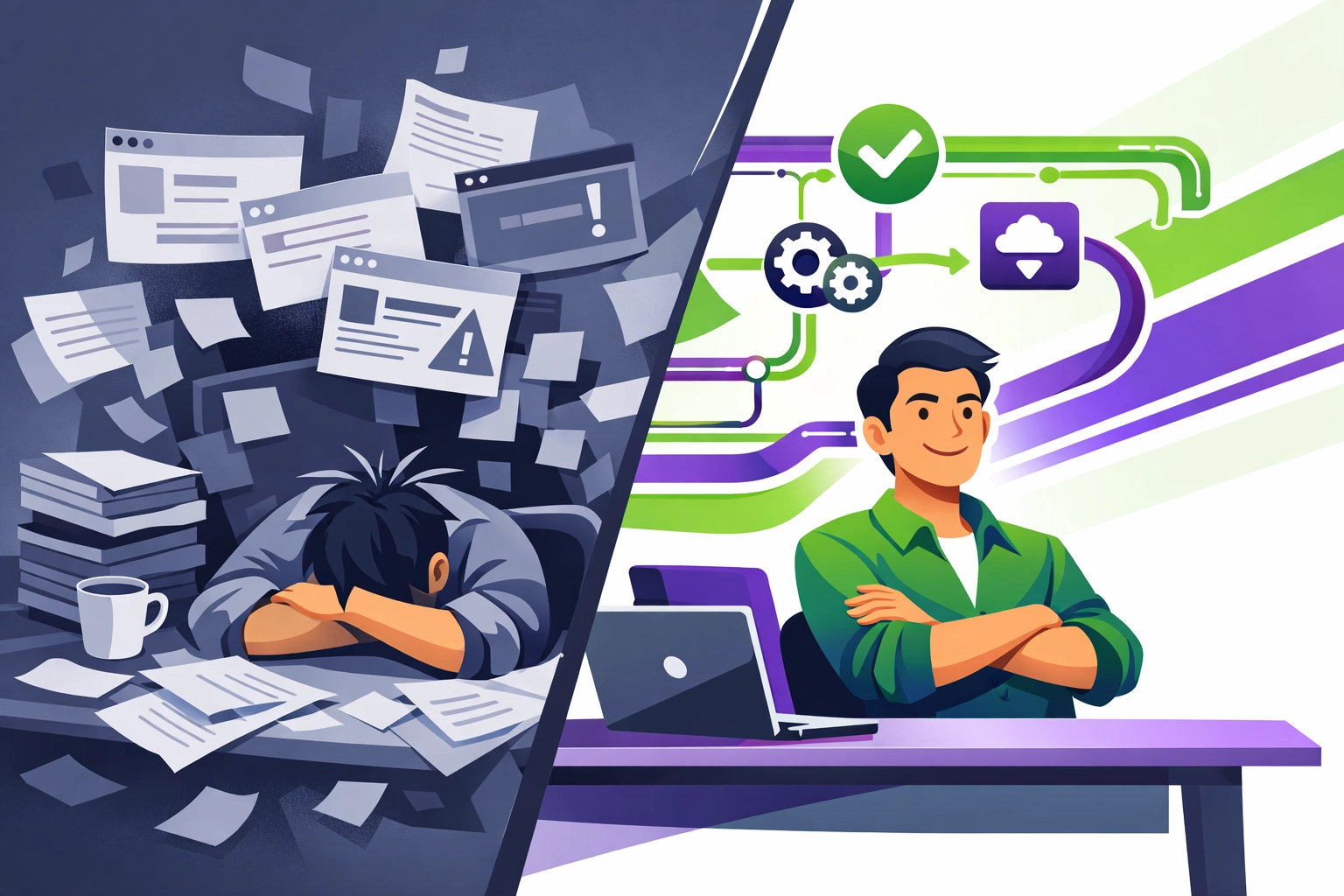
Most companies treat AI like a science experiment. They pilot a tool, get excited about the possibilities, assign it to someone who's already underwater, and then… nothing happens. Three months later, it's sitting unused while your team defaults back to manual processes.
Here's why that happens:
Disconnected tools. That AI lead enrichment tool looks great until you realize it doesn't talk to HubSpot, can't trigger your outbound sequences, and requires someone to manually copy-paste data between systems.
No clear ownership. AI agents aren't "set it and forget it." They need monitoring, optimization, and someone who understands both the technology and your business logic. Without clear ownership, they become shelfware.
Missing the "so what" factor. Cool demos don't equal business impact. An AI that writes email subject lines means nothing if your targeting is broken or your ICP is too broad.
The companies winning with AI aren't chasing features. They're deploying agents with a clear job description, connected workflows, and measurable outcomes.
The Three Types of AI Agents Actually Moving the Needle
When we deploy AI agents for B2B SaaS clients, we focus on three categories, each designed to handle specific, high-friction workflows that drain your team's capacity.
Revenue Agents: Scaling Your Sales Motion Without Adding Headcount
Revenue agents handle the repetitive, time-consuming work that keeps your AEs from selling.
What they actually do:
- Monitor thousands of accounts for intent signals (G2 reviews, pricing page visits, competitor comparison searches)
- Trigger personalized outreach sequences when accounts match your ICP and show buying behavior
- Draft follow-up emails, meeting recaps, and next steps after sales calls
- Score opportunities based on engagement patterns and deal velocity
One client we worked with implemented revenue agents to monitor 1,000 target accounts. The result? Meeting rates doubled because reps stopped cold-calling and started reaching out at exactly the right moment with context-specific messaging.
The key isn't replacing your sales team. It's giving them leverage so they spend time on high-value conversations, not manual research and data entry.
Operations Agents: Fixing the Plumbing So Revenue Can Flow
Operations agents tackle the backend workflows that slow down your entire revenue engine, stuff that doesn't get sexy LinkedIn posts but absolutely kills deals when it breaks.
What they actually do:
- Automate proposal and RFP responses (companies report 90% faster turnaround and 50%+ higher win rates)
- Clean and enrich CRM data so your reports are actually accurate
- Route leads based on territory, product fit, and rep capacity
- Generate pipeline forecasts and flag at-risk deals before they slip
Think about how much time your RevOps team (if you even have one) spends fixing data issues, building reports, and answering "Why did this lead go to the wrong person?" Operations agents handle that automatically.
This is where RevOps consulting meets real automation. You're not just cleaning up HubSpot, you're building systems that stay clean and keep your go-to-market strategy running smoothly.
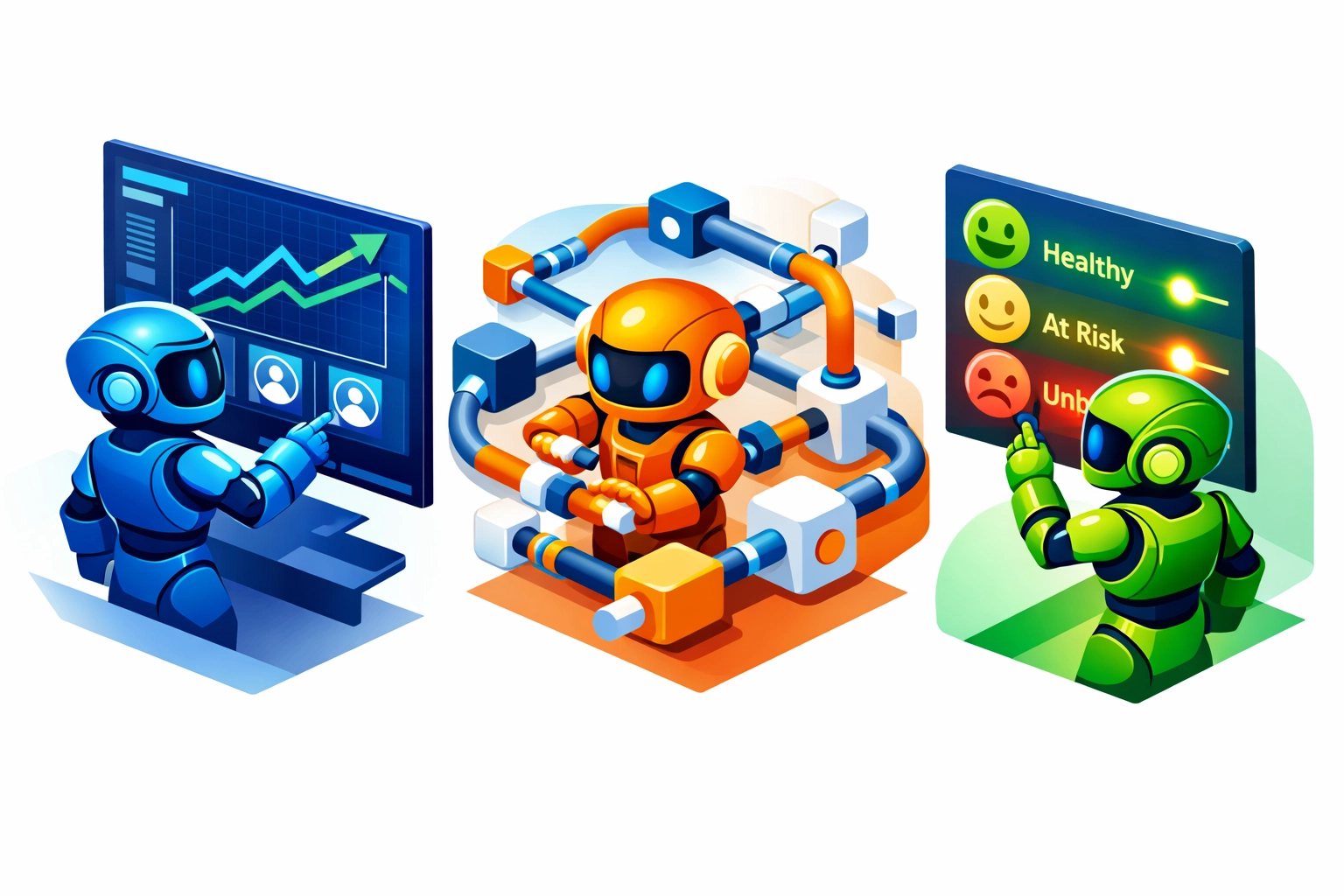
Customer and Support Agents: Keeping Expansion Revenue on Track
For SaaS companies, churn is the silent growth killer. Customer and support agents prevent small issues from becoming cancellation notices.
What they actually do:
- Monitor support tickets and escalate high-priority issues before customers churn
- Identify expansion opportunities based on product usage patterns
- Automate onboarding sequences and check-in emails
- Surface customer health scores and trigger intervention workflows
These agents don't replace your CSMs. They give them superpowers, flagging risks early, identifying upsell moments, and making sure no customer falls through the cracks.
The Design, Build, Optimize Framework: How to Actually Deploy AI Agents
Here's the honest truth: You can't just "plug in" AI and expect magic. Production-ready agents require a framework.
We use a three-phase approach that ensures AI agents actually work in your environment, with your data, and for your specific business goals.
Phase 1: Design (Define the Job, Not the Tool)
Before you pick a single AI tool, you need to answer these questions:
- What specific workflow is killing your team's productivity?
- What does success look like in metrics? (Meeting rates, response times, data accuracy?)
- What systems need to connect? (CRM, support desk, data warehouse?)
- Who owns this agent, and how will they monitor performance?
Most companies skip this step. They buy the tool first, then try to figure out where it fits. That's backward.
The design phase maps your existing workflows, identifies bottlenecks, and defines exactly what the AI agent needs to accomplish. This is where B2B SaaS growth consulting experience matters, we've seen what works across dozens of companies.
Phase 2: Build (Integrate, Don't Isolate)
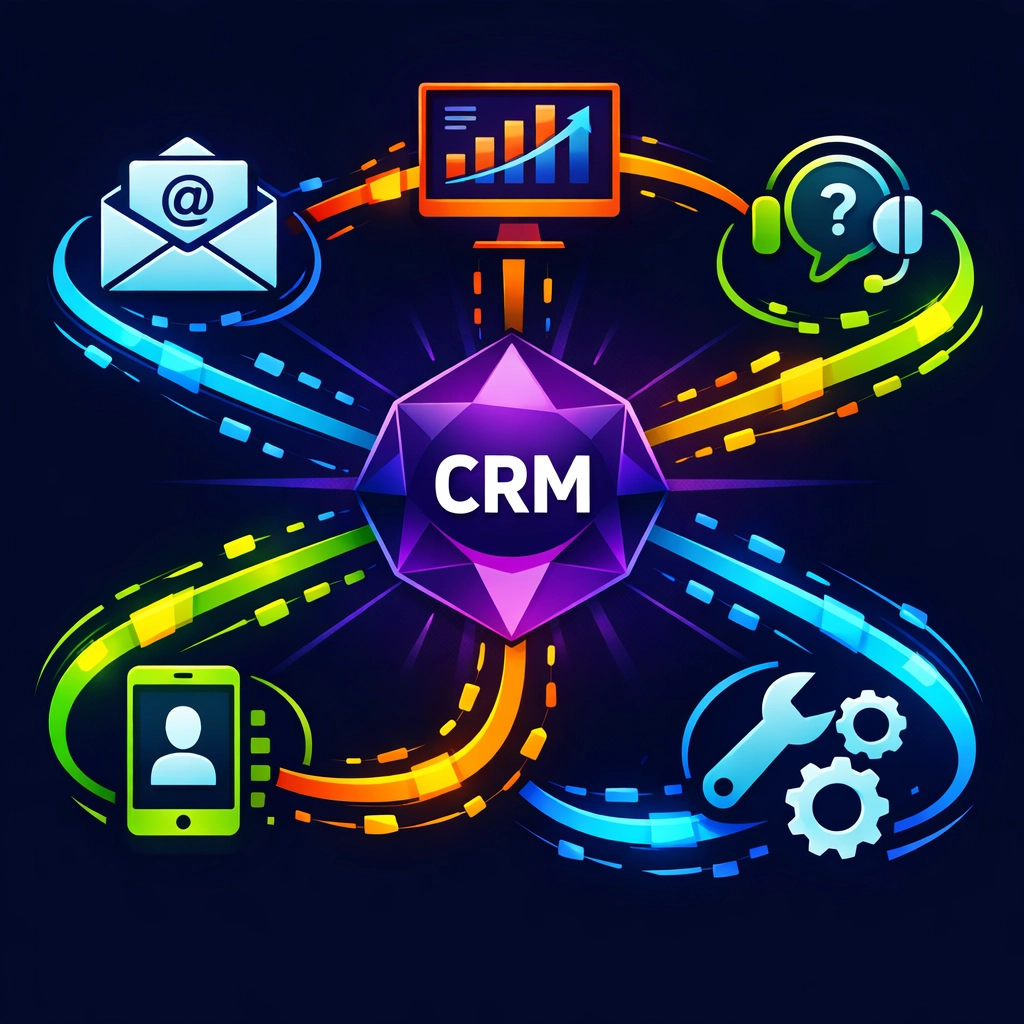
This is where we connect the dots between your AI agents and your existing tech stack.
Key integrations:
- CRM (HubSpot, Salesforce) for lead routing, enrichment, and automation triggers
- Intent data platforms (Factors.ai, 6sense) for account monitoring and signal detection
- Communication tools (email, Slack) for alerts and human-in-the-loop approvals
- Support systems (Zendesk, Intercom) for customer health tracking
One example from the field: A B2B platform we worked with connected intent data, CRM activity, and website behavior to identify anonymous visitors and trigger outreach only when accounts met ICP criteria. The result? 35% pipeline increase because they stopped wasting time on low-fit leads.
The build phase isn't about coding from scratch. It's about stitching together your systems so AI agents can access data, take action, and hand off to humans when judgment is needed.
Phase 3: Optimize (Measure, Tweak, Scale)
AI agents aren't "set it and forget it." They need ongoing optimization based on performance data.
What we monitor:
- Conversion rates at each stage (outreach → meeting, meeting → opp)
- Data quality and enrichment accuracy
- False positive rates (e.g., leads that looked good but weren't)
- Time saved vs. outcomes generated
The optimize phase is where you turn "working" into "working really well." Small tweaks to scoring models, outreach timing, or escalation rules can dramatically improve results.
This is also where you scale. Once one agent is dialed in, you replicate the framework across other workflows. Revenue agents → operations agents → customer agents. Each one building leverage across your growth engine.
What "Real Leverage" Actually Looks Like
Let's cut through the jargon. Here's what AI agents deliver when they're deployed right:
Your AEs spend 80% of their time selling, not researching. No more manual account digging or guessing when to reach out.
Your proposals get out the door 3x faster. RFP automation means you respond while competitors are still scheduling kickoff calls.
Your pipeline forecast is actually accurate. Operations agents keep data clean and flag risks automatically.
Your churn rate drops because CSMs catch issues early. Customer agents monitor health scores and trigger interventions before contracts end.
This isn't about replacing your team. It's about giving them leverage so a 10-person revenue org can operate like a 30-person team.
The Bottom Line
AI agents aren't magic. They're tools that automate repetitive, high-friction workflows: if you deploy them with a clear strategy, connect them to your existing systems, and optimize based on real outcomes.
The companies winning right now aren't chasing every new AI feature. They're focused on production-ready agents that handle specific jobs, integrate with their tech stack, and create measurable leverage.
If you're a B2B SaaS founder ($1M-$25M ARR) tired of AI demos that go nowhere, it's time to think differently. Focus on workflows, not features. Build for integration, not isolation. Measure outcomes, not activity.
That's how you turn AI from hype into a growth engine that actually runs.
Want to explore how AI agents could scale your revenue operations? Let's talk about your specific bottlenecks and build a deployment plan that fits your go-to-market strategy.


